
VoIP Phone System Guide: How to Choose the Best VoIP Phone System for a Small Business
If you’re researching a VoIP phone system for your small business, you’re probably trying to answer a few simple questions:
What exactly is VoIP?
Is it better than a traditional phone system?
Which features actually matter?
How much should I expect to spend?
And how do I choose the right solution?
The good news is that finding the best VoIP for a small business doesn’t have to be overwhelming. This guide walks you through everything you need to know – from how VoIP works to the different business phone system options available today. You’ll also learn which features are worth paying for, how cloud phone systems compare to traditional setups, and what to consider before making a decision. Whether you’re replacing an aging office phone system or setting up communications for a brand-new business, this guide will help you make a more informed choice.
What Is a VoIP Phone System?
A Voice over Internet Protocol (VoIP) phone system lets businesses make and receive phone calls over an internet connection instead of traditional telephone lines. While voice calling is still the core function, today's business phone systems do much more than place calls. Most combine several communication tools into one platform, including:
- Business phone calls
- Video meetings
- Team messaging
- Business texting (SMS)
- Voicemail
- Call routing
- Online administration
Instead of juggling multiple communication tools, your team can work from a single system whether they're in the office, working remotely, or traveling. For many small businesses, that's one of the biggest advantages of switching to a cloud-based phone system. Because everything happens over an internet connection, employees can answer business calls from almost anywhere using:
- A desktop application
- A smartphone app
- A web browser
- An IP desk phone
- A conference room phone
This flexibility means your business phone number stays with your business - not your office.
Why Are Small Businesses Choosing VoIP?
Traditional business phone systems were designed for offices where everyone worked from the same location. Business communication looks very different today. Employees split time between home and the office. Customer conversations happen through multiple channels. Teams collaborate across different locations. Cloud-based VoIP systems support these changes by making communication easier to manage from almost anywhere. Some of the biggest reasons businesses switch include:
- Lower communication costs
- Easier expansion as the business grows
- Better support for remote and hybrid employees
- Professional call handling
- Centralized administration
- Built-in collaboration tools
Rather than maintaining expensive hardware, most businesses simply manage users and settings through an online dashboard. Lets dive in a little deeper into these reasons:
Benefits of Using a VoIP Phone System
Lower Communication Costs
For many businesses, cost savings are one of the biggest reasons to move to VoIP. Traditional phone systems often require dedicated hardware, ongoing maintenance, technician visits, and expensive upgrades. Cloud-hosted systems remove much of that complexity. Instead, businesses typically pay a monthly subscription based on the number of users or phone lines they need. Many businesses can also continue using existing laptops, smartphones, or desktop computers instead of purchasing new office phones. This is great for small businesses, since the team can work from anywhere – not just the office.
Greater Flexibility
Business no longer happens only inside the office. Whether employees are traveling, working from home, or meeting clients, they can continue making and receiving calls using the same business number. That flexibility helps businesses stay responsive without relying on personal phone numbers. When you can answer from anywhere to get that meeting scheduled, you don’t risk missing that chance because life interrupted work.
Better Customer Experiences
The right phone system doesn’t just make life easier for employees – it can improve the customer experience too. Features like customizable automated attendants, call routing, voicemail transcription, and business texting help callers reach the right person faster while reducing missed calls. For customers, that often means less waiting and fewer transfers. Everybody hates a bad auto attendant, but a good one? That can be a great asset that lets your team not require someone dedicated to answer and route everyone’s calls all day long – which lets them stay productive on other things too.
Easier to Scale
Growing businesses shouldn’t have to replace their phone system every few years. Cloud VoIP platforms make it easy to add users, departments, phone numbers, or office locations through an administrative dashboard. As your business grows, your phone system can grow with it. Call Routing is easy to change when you can do so based on time of day, day of the week, and that you’re closed on certain holidays but not others.
Increased Productivity
Instead of switching between separate apps for meetings, messaging, and calls, employees can manage communication from one place. Many business phone systems also automate routine tasks like voicemail transcription, call summaries, and meeting notes, helping teams spend less time on administrative work.
Business Phone System Options
Not every business phone system works the same way. Understanding your options makes it easier to choose the right solution for your business
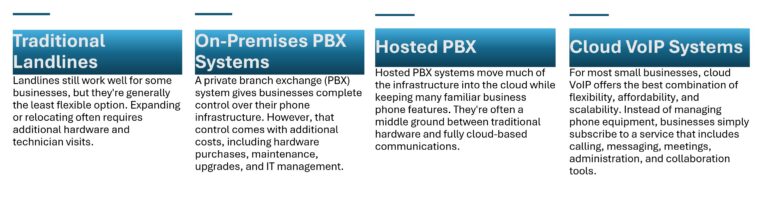
Traditional Landlines
Landlines still work well for some businesses, but they’re generally the least flexible option. Expanding or relocating often requires additional hardware and technician visits.
On-Premises PBX Systems
A private branch exchange (PBX) system gives businesses complete control over their phone infrastructure. However, that control comes with additional costs, including hardware purchases, maintenance, upgrades, and IT management.
Hosted PBX
Hosted PBX systems move much of the infrastructure into the cloud while keeping many familiar business phone features. They’re often a middle ground between traditional hardware and fully cloud-based communications.
Cloud VoIP Systems
For most small businesses, cloud VoIP offers the best combination of flexibility, affordability, and scalability. Instead of managing phone equipment, businesses simply subscribe to a service that includes calling, messaging, meetings, administration, and collaboration tools.
Features Worth Looking For
Not every feature will matter to every business. Rather than choosing the longest feature list, focus on the capabilities your employees will actually use.
Reliable Calling
Every business phone system should deliver dependable call quality. Look for Local phone numbers, Unlimited domestic calling, and High uptime guarantees no matter what you do. Also consider International calling options and Toll-free numbers if those are something your business needs.
Automated Attendants
An automated attendant, usually AI in most cases, answers incoming calls and directs callers to the right employee or department. This creates a more professional experience while reducing manual call transfers.
Call Routing
Call routing ensures customers reach the appropriate person based on business hours, departments, availability, or predefined rules.
Mobile Apps
One of the biggest advantages of VoIP is mobility. Softphone apps allow employees to answer business calls from their laptops or smartphones while keeping personal numbers private.
Business Messaging
Many cloud phone systems combine internal messaging and business texting within the same application. That makes it easier for employees to communicate without constantly switching between software.
Video Meetings
Instead of relying on separate meeting software, many business phone systems include integrated video conferencing. For businesses already collaborating remotely, this can simplify daily communication.
Reporting & Analytics
Analytics help businesses understand how their phone system is performing. Common reports tend to include things like Call volume, Missed calls, Wait times, Average call length, and Peak calling periods. These insights can help identify staffing needs and improve customer service.
AI Features
Artificial intelligence has become increasingly common in business phone systems. Not every business will need every AI feature, but it’s worth considering which capabilities will actually improve your team’s workflow. Some of the most practical AI features include Live call transcription, Meeting summaries, Automated note-taking, Intelligent call routing, Conversation search, and Action item generation.
How to Choose the Best VoIP for Your Small Business
There's no single "best" VoIP phone system for every business. Instead, the right choice depends on how your team communicates. As you compare providers, ask yourself a few practical questions, or check out our Downloadable Content for this month to download a Printable PDF Checklist.
How many employees need phone service?
Choose a system that fits your current team while leaving room for future growth.
Which features will your team actually use?
It’s easy to pay for features that sound impressive but rarely get used. Start with your everyday communication needs and build from there.
Does it integrate with your existing software?
A phone system should work alongside your CRM, help desk software, calendars, productivity tools, and collaboration platforms – not create extra work.
What does the total cost look like?
Don’t just compare monthly pricing. Also consider: Hardware costs, Setup fees, Contract requirements, International calling charges, and Additional feature costs. Looking at the total cost of ownership gives you a much clearer picture of long-term value.
Is it reliable?
Your phone system is often the first point of contact for customers. Look for providers that publish uptime commitments, offer strong security measures, and provide responsive customer support.
Frequently Asked Questions
Is VoIP a good choice for small businesses?
For many small businesses, yes. Cloud-based VoIP systems are typically easier to scale, support remote work, and provide more features than traditional phone systems – all without requiring significant hardware investments. However, there are and always will be exceptions to the rule, so make sure to consider any potential issues having your phone line internet-based may cause your small business.
Can I keep my current business phone number?
In most cases, yes. Most providers support number porting, allowing you to transfer existing business numbers without changing your public contact information. We’ll be happy to help get this arranged if you find you have trouble, but most carriers are happy to help you through it themselves, and everyone’s process is a little different.
Do I need desk phones?
Not necessarily. Many businesses use desktop apps, mobile apps, or web browsers instead of dedicated desk phones. If your team prefers physical phones, most cloud systems also support compatible IP handsets, and many providers allow for Bring Your Own Phone (BYOP) plans designed around you owning the physical equipment yourself.
Is VoIP secure?
Most business VoIP platforms include encryption and administrative security features to help protect communications – but it’s always better to ask and be sure than assume and learn otherwise later. Regardless, Businesses should also use strong passwords, enable multi-factor authentication, and follow basic cybersecurity best practices.